HANDLING
Edges and label only
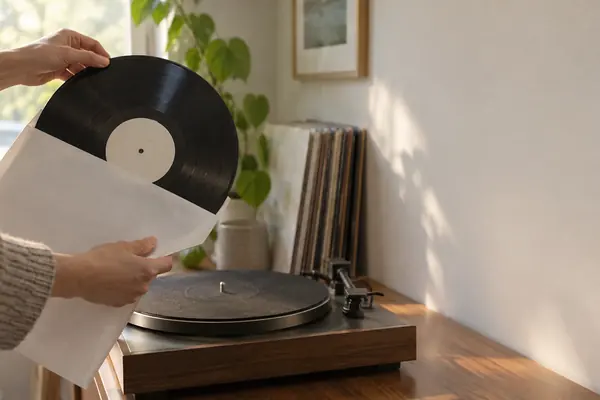
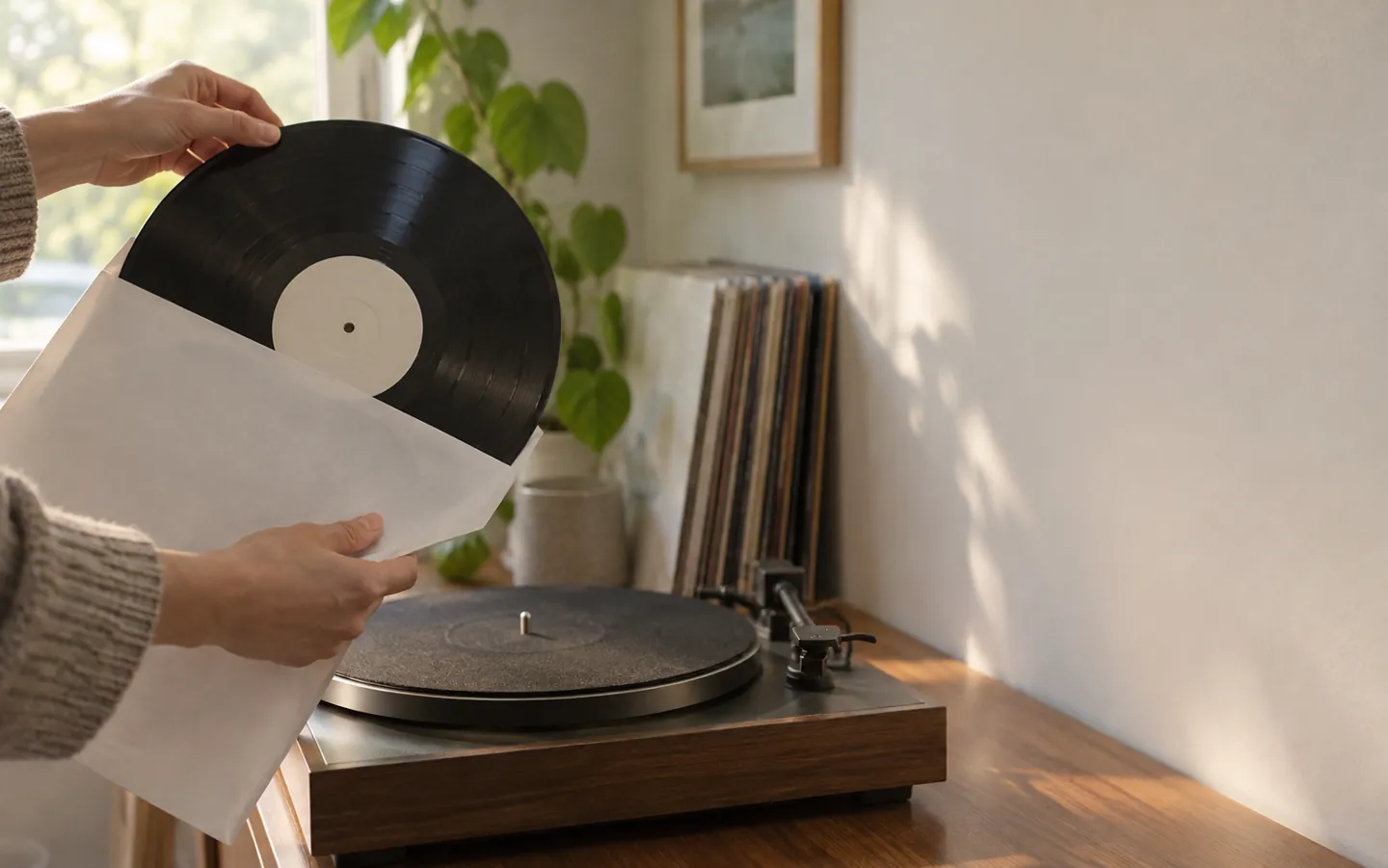
The Library of Congress says to wash and dry your hands and never touch the playing surface. Hold a disc by its edge and label.
How to do itWHAT THE ARCHIVES SAY
The disc in disc jockey is a fragile thing.
A record stores sound as wiggles in a groove, and dust, heat and pressure all damage it. National sound archives give the same advice: clean hands, edges only, upright, cool and dry.
SPIN SAFE advice from the archives
THE SHORT ANSWER
The rules come from sound archives and conservators.
They scale down to one shelf at home.
HANDLING
The Library of Congress says to wash and dry your hands and never touch the playing surface. Hold a disc by its edge and label.
How to do itSTORAGE
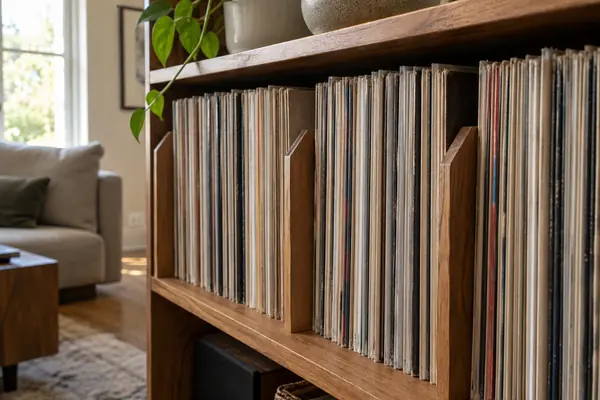
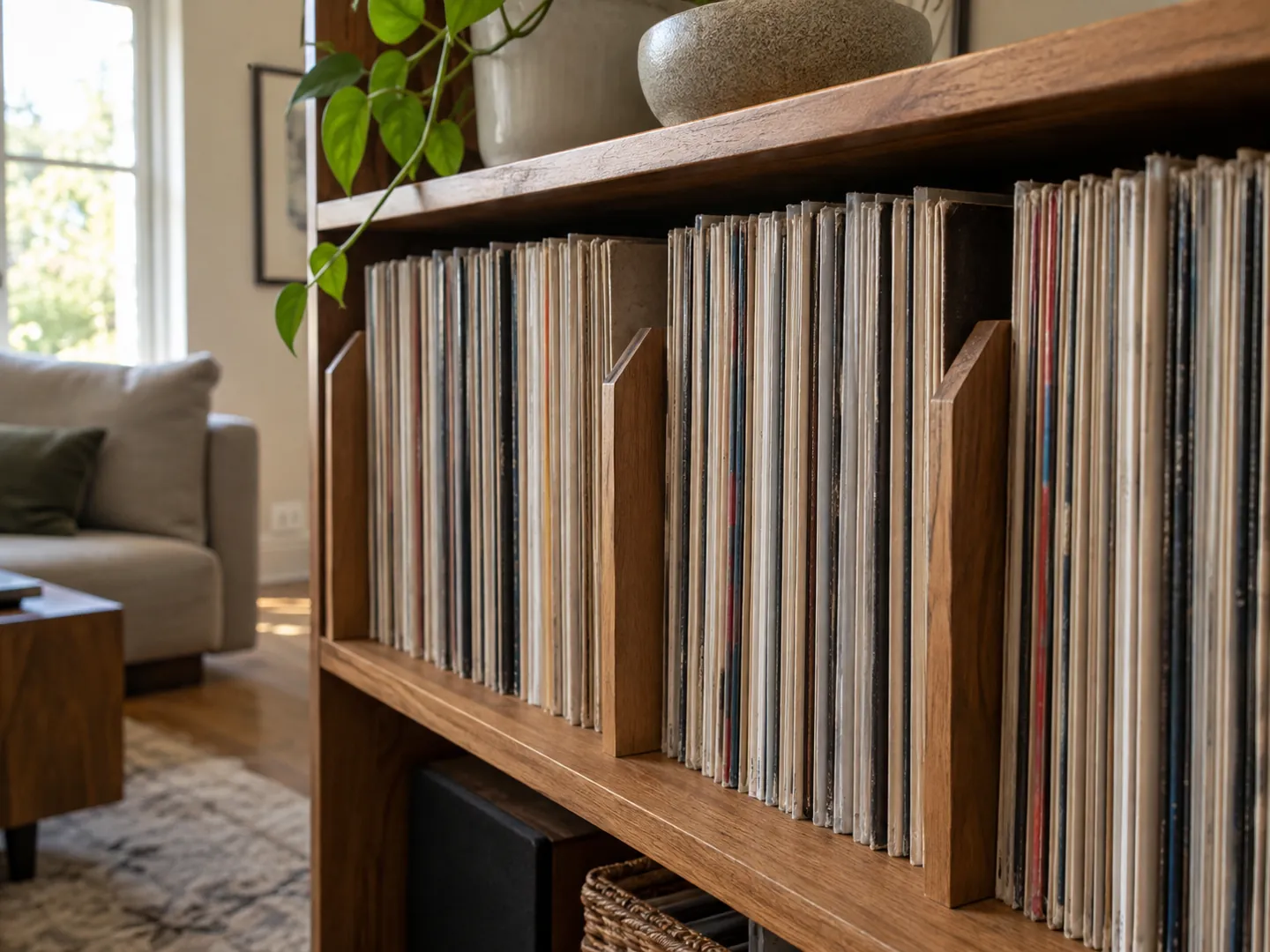
Archives store every disc upright, with firm dividers about every 4 to 6 inches to stop records leaning and warping.
Check your shelfDUST
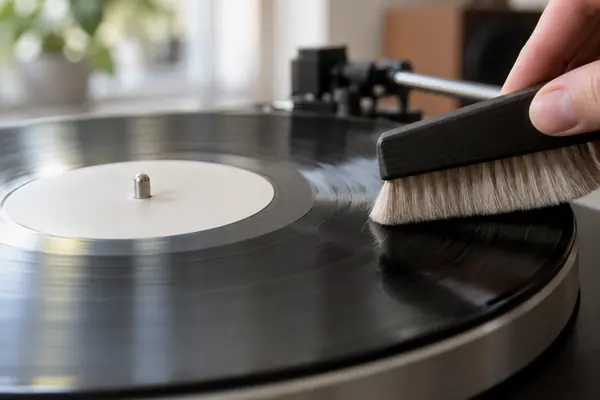
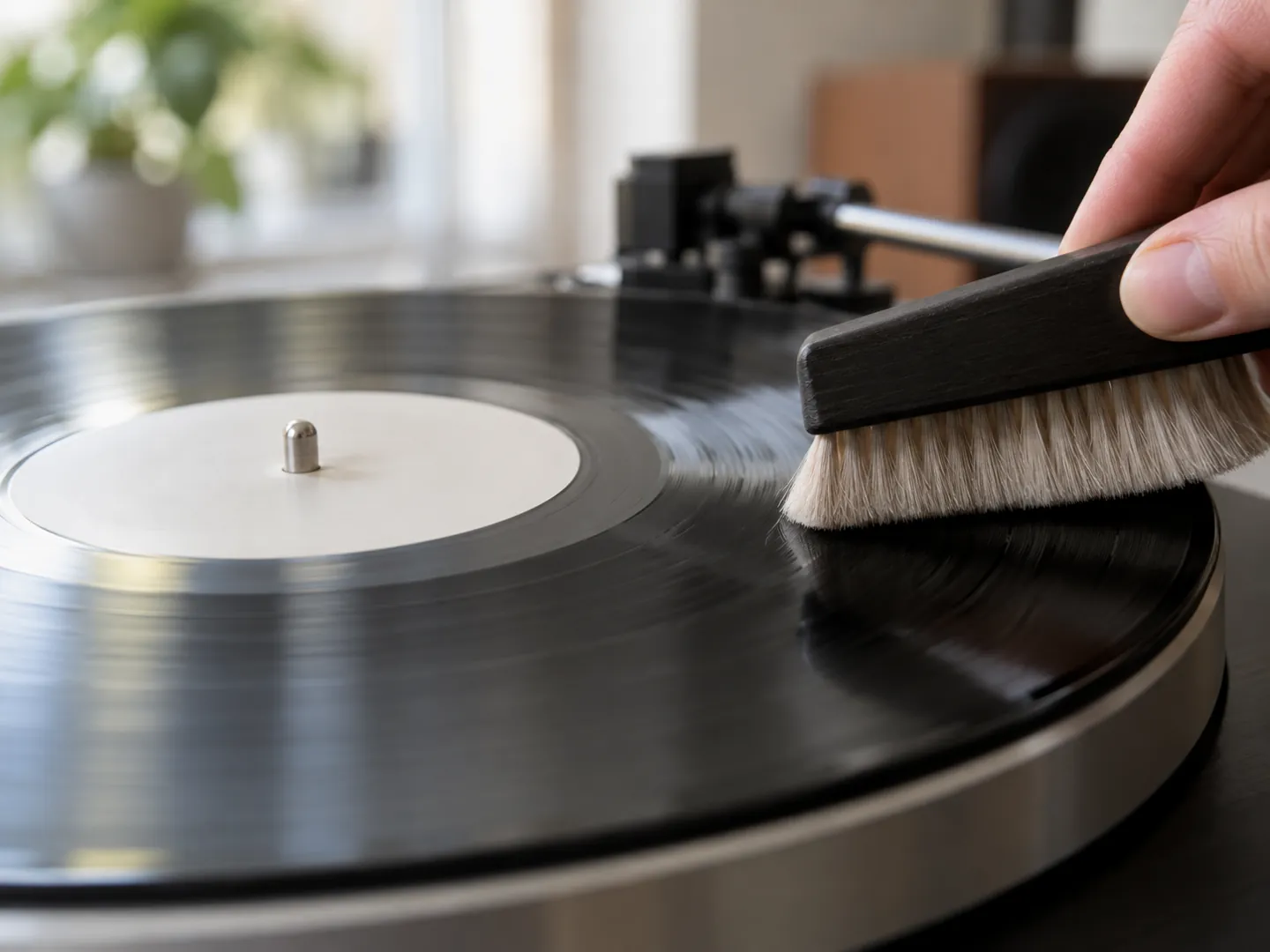
NEDCC calls dust extremely damaging because it gets ground into the grooves. Australia's sound archive suggests brushing discs before each play.
See the numbersA QUICK SHELF CHECK
Pick the spot closest to yours to see what archive guidance says about it. The bar shows how much risk the guidance links with that kind of storage.
Based on preservation guidance from the Library of Congress, NEDCC and the National Film and Sound Archive of Australia.
TWO NUMBERS WORTH KNOWING
One figure for the air around your records,
one for how far apart the dividers go.
35–40% RH
Relative humidity for a home collection
The Library of Congress suggests home collections be kept cool (room temperature or below), relatively dry at about 35 to 40% relative humidity, clean and stable.
HUMIDITY · LIBRARY OF CONGRESS
100–150 mm
Spacing of supports between upright discs
The National Film and Sound Archive of Australia shelves discs upright with dividing supports every 100 to 150 mm. US archives give the same spacing as 4 to 6 inches.
DIVIDERS · NFSA
NFSA says discs have survived a century or more, while some have failed in under 10 years because of chemical instability, poor storage or careless handling.
FOUR ARCHIVE HABITS
None of these needs special kit. They are the everyday habits sound archivists use, scaled down to one shelf and one turntable.
NEDCC says to wash and dry your hands first, and not to wear cotton gloves, which can make you drop a disc.
NFSA advises using the tonearm lifter rather than lowering the stylus by hand onto LPs and 78s.
Brush light dust off by hand before playing, and keep a separate brush for 78s and LPs.
Archives replace plain paper sleeves with high-density polyethylene ones, which can fit inside an original sleeve you want to keep.
HOW A RECORD WORKS
Britannica describes a record as storing sound waves as undulations in a groove on a rotating disc. A stylus follows the groove and its vibrations are turned back into sound, which is why dust and scratches are heard.
Early records played at 78 RPM. The long-playing record arrived in 1948 at 33⅓ RPM, and the 45 RPM disc was used for singles. Merriam-Webster dates the word disc jockey to 1940.
Questions
Upright. The Library of Congress says to store all formats on edge, with firm dividers every 4 to 6 inches that support the whole face of each disc in its sleeve.
No. NEDCC advises washing and drying your hands instead, because cotton gloves can make you drop the item. Hold discs by the edge and label.
For home collections the Library of Congress suggests room temperature or below and about 35 to 40% relative humidity, kept stable. Avoid attics, basements, radiators and direct light.
NFSA suggests brushing light dust off by hand before playing, using antistatic treatment if needed, with separate brushes for 78s and LPs. The Library of Congress mentions canned air for dust.
NFSA says warped discs may be temporarily flattened with gentle, precise heating before playing, but recommends professional help.
Sources
ABOUT THIS NAME
doodledj.com is part of the DoodleSale portfolio. Check the current listing and available purchase or lease options.